Beneath canopies that swallow the sun whole, time moves the way water moves through stone — slowly, with intention, and without ever asking permission.
Scroll to enter
Introduction
A rainforest is not a place. It is a slow, breathing organism made of ten thousand species, each one quietly conspiring with the others to keep the air alive.
Tropical rainforests cover only six percent of Earth's surface, yet they shelter more than half of every living thing we have ever named — and most of what we have not. The Amazon alone produces six percent of the planet's oxygen and exhales twenty billion tonnes of water vapor into the sky every single day, weaving the clouds that water continents thousands of kilometers away.
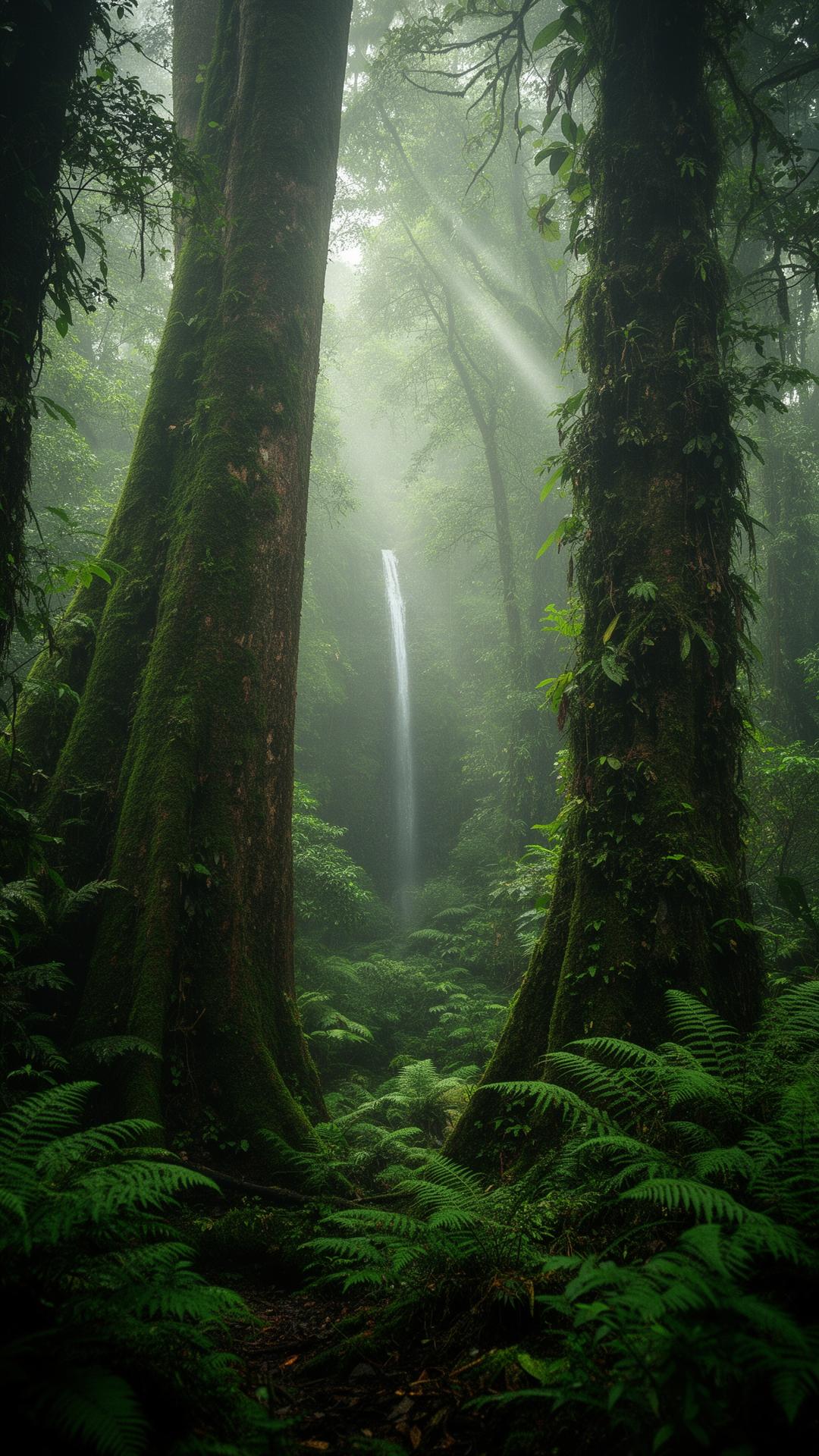
To walk into one is to walk into a cathedral that has been growing, uninterrupted, for sixty million years. The light comes down in shafts. The silence is full of small, attentive things. Nothing here is in a hurry.
60M
Years old
50%+
Of all species
1%
Of sunlight reaches the floor
20B t
Water vapor / day
01The understory
Where the light is rationed.
Only one percent of the sun ever reaches the forest floor. Everything that grows down here — ferns, fungi, the patient seedlings of giants — has learned to live on almost nothing, and to wait for centuries if it must. A single brazil-nut sapling may sit, no taller than a child, for forty years, waiting for an old tree to fall and open a small window of sky.
02The canopy
A hidden country, eighty meters up.
Above the mist sits another world entirely. Orchids never seen from the ground, frogs that complete their entire lives in a single puddle held by a leaf, sloths that move so slowly that algae grow in their fur. Birds whose feet have forgotten what soil feels like. Scientists estimate that the canopy contains more undescribed species than any other habitat on Earth.
03The emergents
The giants who break the ceiling.
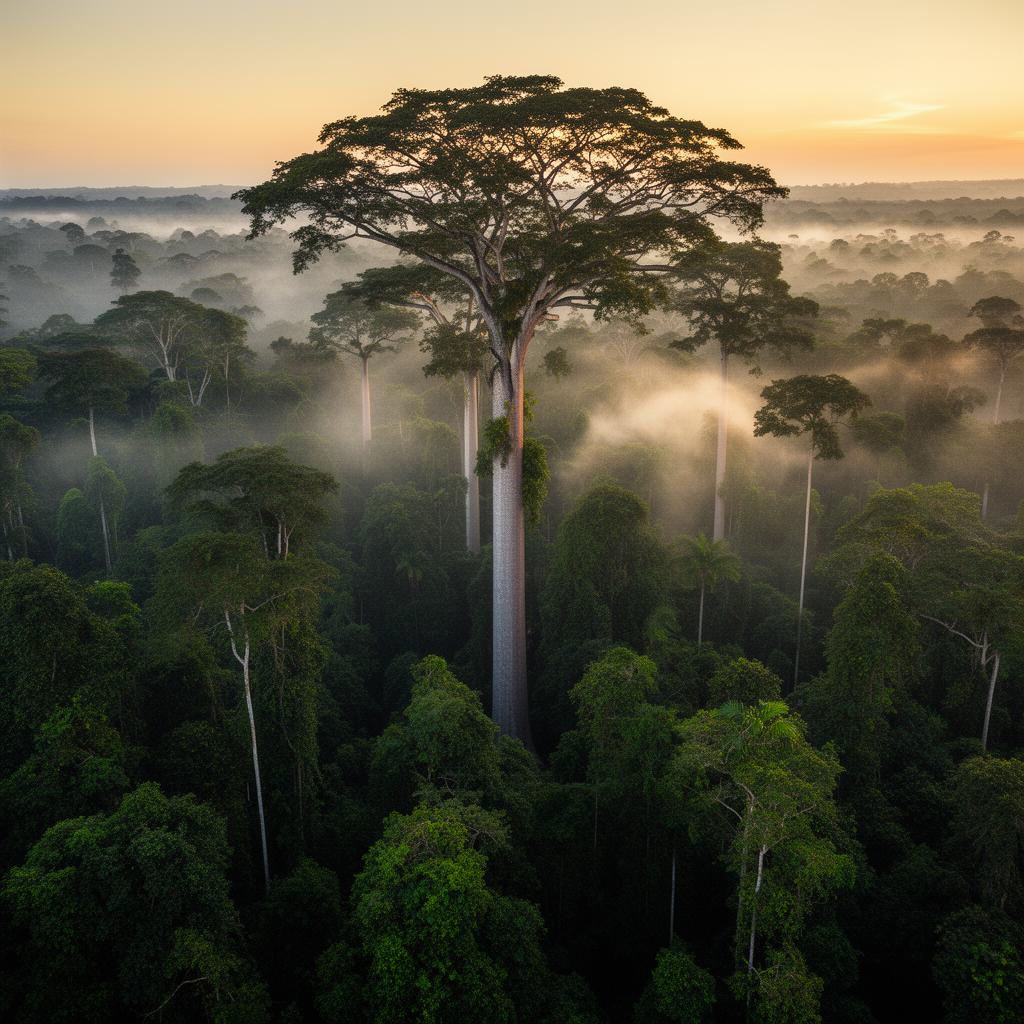
A few trees — the kapok, the ceiba, the brazil-nut — rise above everything else, sometimes seventy meters into the open air. They are the lighthouses of the forest. Harpy eagles nest in their crowns. Spider monkeys use them as highways. To stand at the base of a kapok is to feel, for a moment, very young.
04The mycorrhizal web
The internet beneath your feet.
Under every footstep, an invisible network of fungal threads links almost every tree in the forest. Through it, trees share sugar, send warnings about insect attacks, and quietly feed their dying neighbors. The forest, in a real sense, is one organism keeping itself alive.
“
A forest does not grow upward. It grows inward, century by century, until even silence has roots.
Wildlife
Lives that share the green.
A handful of the millions of beings that call the rainforest home — each a small masterpiece of patience and design.
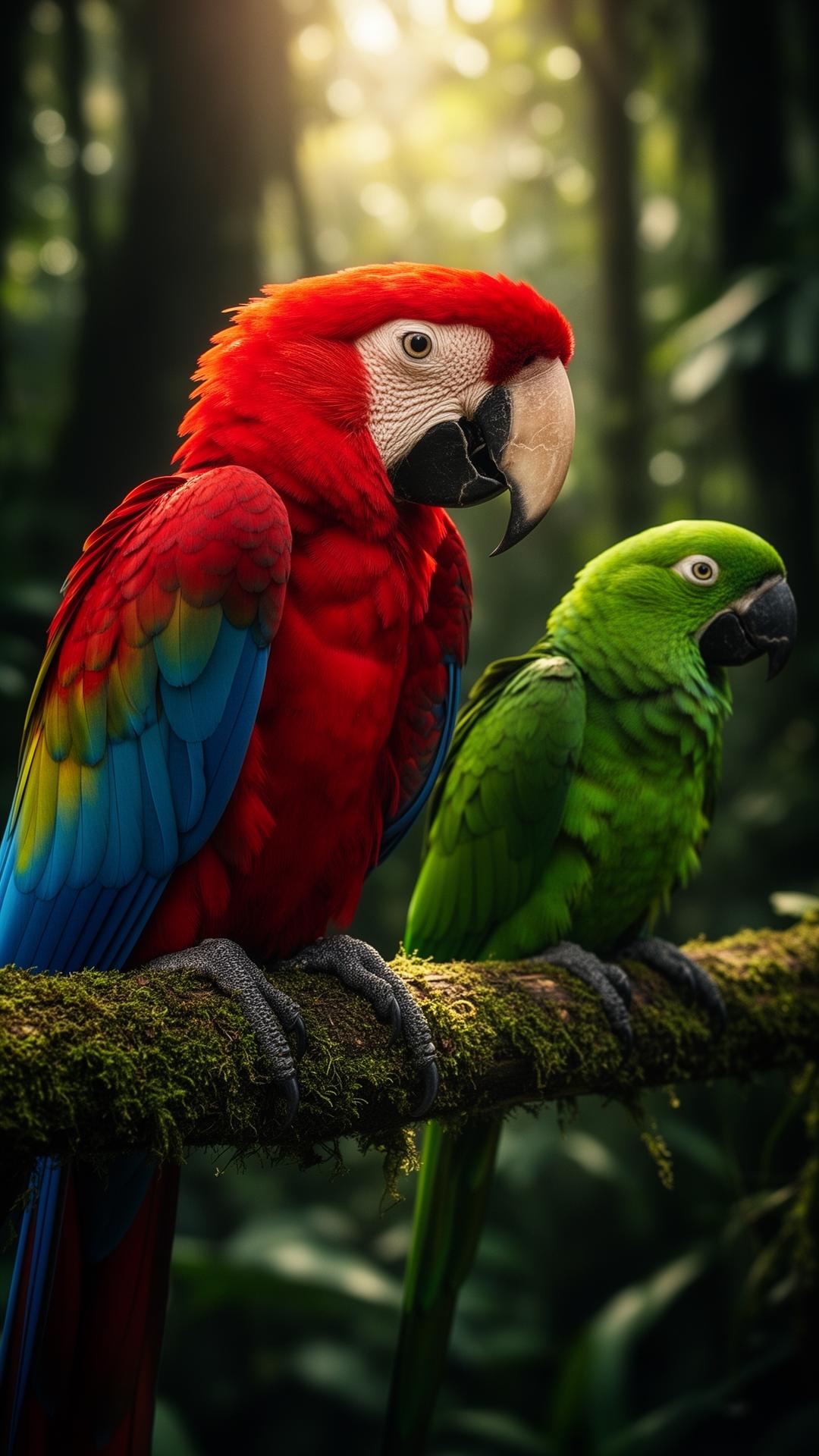
Scarlet macaw
Ara macao
Mates for life, lives over fifty years, and remembers individual humans by face.
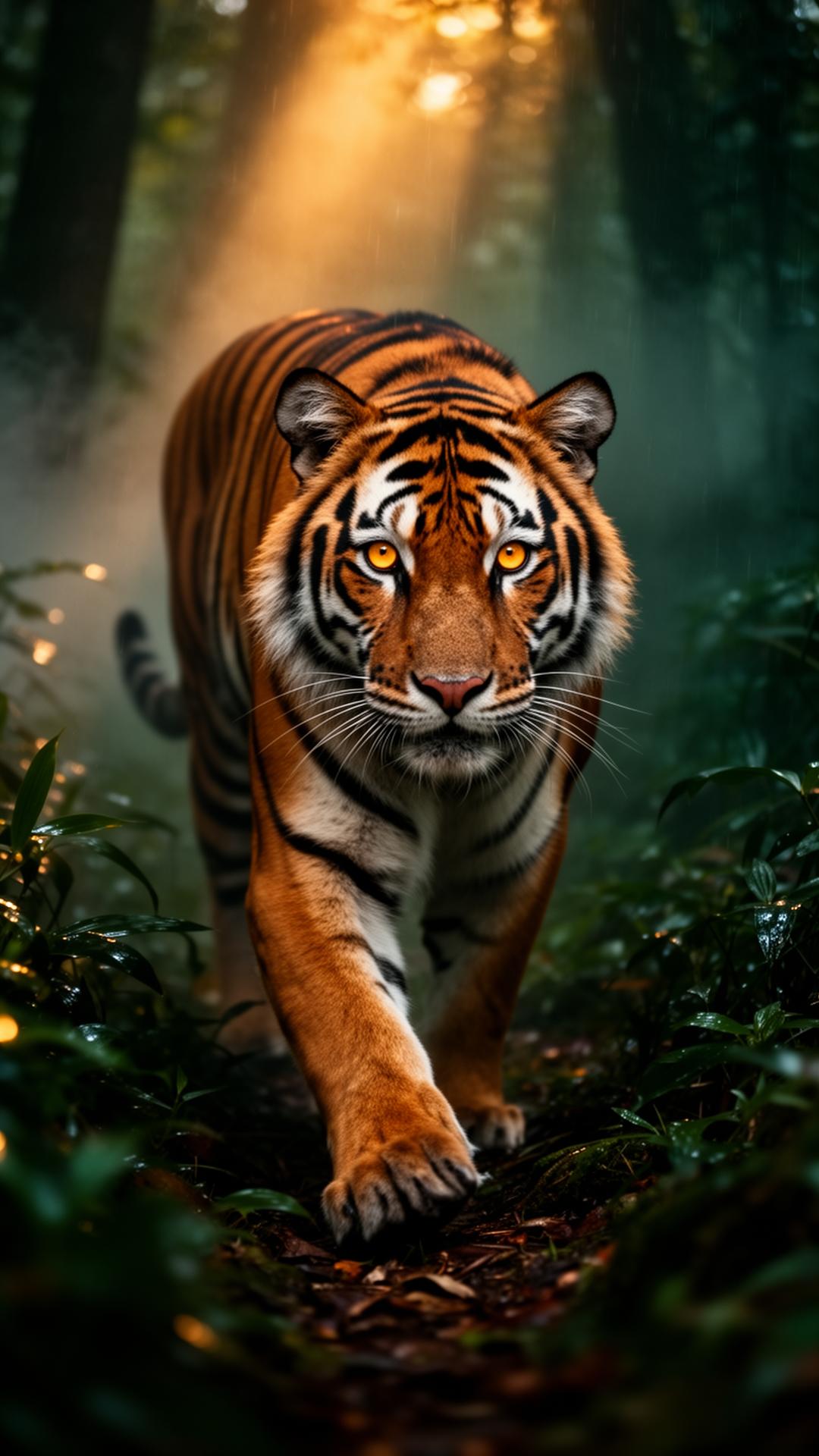
Bengal tiger
Panthera tigris tigris
Three hundred kilograms of silence; a single stripe pattern is as unique as a fingerprint.
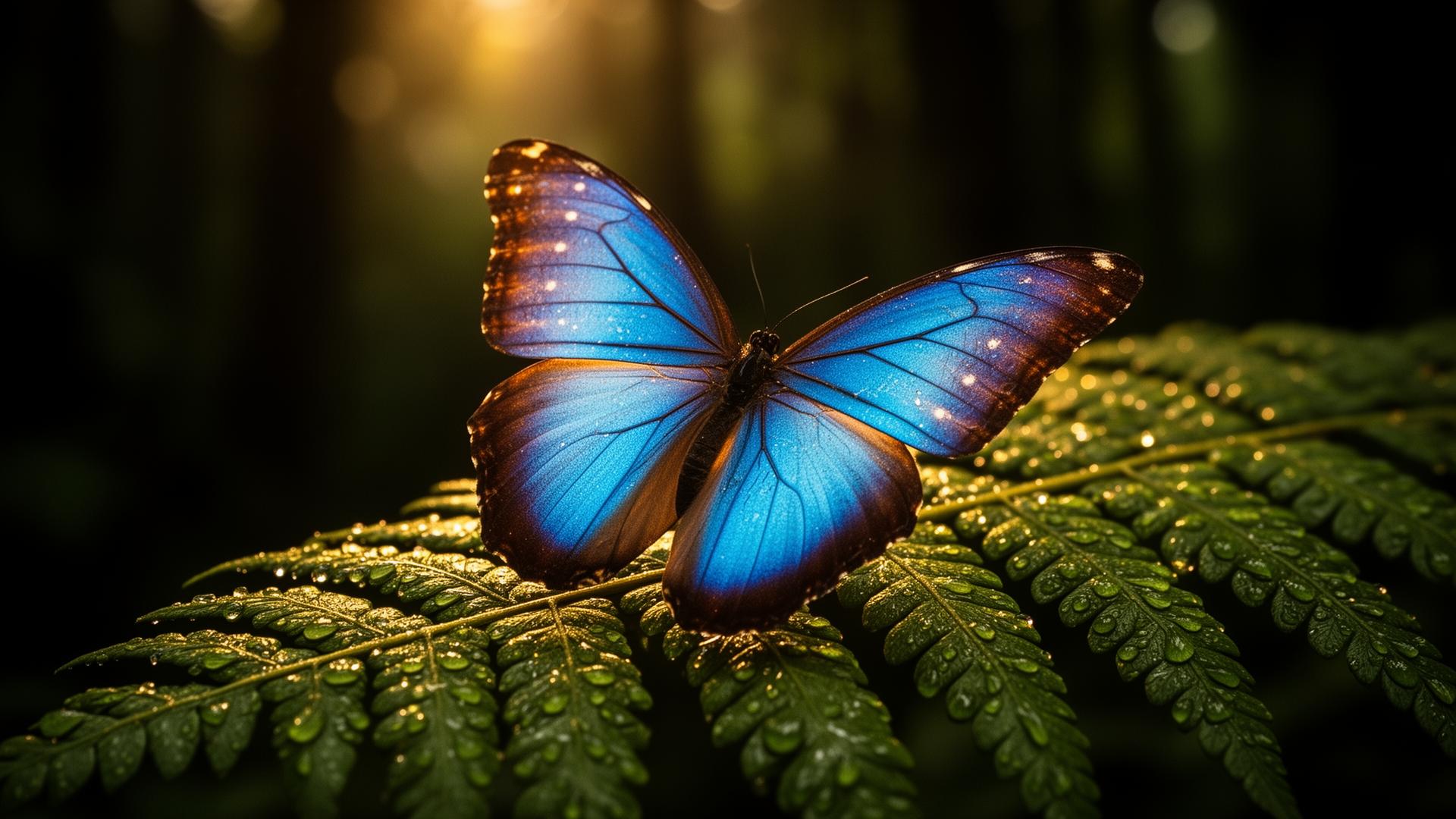
Blue morpho
Morpho menelaus
Its wings have no blue pigment — the color is built from microscopic ridges that bend light.
Geography
Where the great forests still breathe.
From the Amazon basin to the Congo, from Borneo to the Daintree, the world's remaining primary rainforests form a green belt around the equator. Together they regulate global rainfall, store more than 250 billion tonnes of carbon, and hold ecosystems we are still in the act of discovering.
Amazon
5.5M km²
Congo basin
3.0M km²
Borneo & Sumatra
0.7M km²
Daintree
180M years
Field Discoveries
Curious things we learned along the way.
01
The forest waters itself.
Trees release moisture from their leaves that rises, condenses and falls back as rain. The Amazon generates roughly half of its own rainfall — a self-watering organism the size of a continent.
02
Plants that count.
Some carnivorous pitcher plants only digest insects after their trigger hairs are touched exactly twice, ignoring single drops of rain. They have learned, in their own way, to count.
03
A teaspoon of soil, a city.
A single teaspoon of rainforest floor can contain more than a billion microorganisms, including species new to science — the largest unexplored biome on Earth is the one beneath our shoes.
04
The loudest animal alive.
The howler monkey's call can travel five kilometers through dense jungle, the loudest sound made by any land animal.
05
Glass frogs you can see through.
Some Central American frogs have skin so transparent you can watch their heart beat. They evolved this to vanish against backlit leaves.
06
Medicines we have not invented yet.
Around a quarter of all modern pharmaceuticals are derived from rainforest plants — and fewer than one percent of them have been studied.
Field Gallery
Amazon Basin · Brazil
Daintree · Australia
Pacific Northwest · USA
Tijuca · Brazil
Field macro
Manú · Peru
Conservation
We have lost a forest the size of Europe in our lifetimes.
Every minute, an area of primary rainforest the size of forty football fields disappears, mostly to cattle, palm oil and soy. The forest can heal — but only if we let it. Standing forest is worth more alive than dead, and indigenous-led stewardship has been shown, again and again, to be the single most effective form of conservation we have.
01Support indigenous-led land protection — the most effective form of conservation on Earth.
02Choose certified-sustainable wood, paper, soy, beef and palm oil.